Endometriosis Treatment

Learn more about our services

Our Services

Blastocyst Culture
IVF Treatment
Donor Program
Uterine Bleeding
High Risk Pregnancy
Heterotopic Pregnancy
ICSI Treatment
Infertility
Myomectomy
Pregnancy In Diabetes Mellitus
Pregnancy In Hypertension
Pregnancy In Multiple Twins
Pregnancy In RH Compatibility
Pregnancy In Obesity
Recurrent Pregnancy Loss
Tubal Cannulation

LAPAROSCOPY FOR ENDOMETRIOSIS

Laparoscopy, a minimally invasive surgical procedure, plays a pivotal role in the evaluation and treatment of various pelvic organ conditions. It is a preferred approach for examining the pelvic organs and addressing concerns such as severe endometriosis and troublesome scar tissue affecting internal organs, like the bowel or bladder.

When your healthcare provider suggests a laparoscopy, it serves multiple purposes:

  • Diagnostic Precision: Laparoscopy offers the most accurate method to detect endometriosis and other potential issues within the pelvic region. It is the gold standard for diagnosing endometriosis, although the absence of this condition cannot be guaranteed. Endometriosis lesions can be quite small or concealed during the procedure.
  • Therapeutic Intervention: Not only does laparoscopy help diagnose endometriosis, but it also allows for the removal of visible endometriosis implants and troublesome scar tissue responsible for pain and infertility. In cases where an endometriosis cyst, known as an endometrioma, is found on an ovary, it is usually excised.

If you're seeking expert care for endometriosis through laparoscopic surgery, Faridabad offers a range of skilled professionals and treatment options. Our team of experienced Endometriosis treatment in Faridabad is dedicated to providing high-quality, comprehensive care. Explore the benefits of laparoscopy for your endometriosis treatment today.

Frequently Asked Questions

Laparoscopy is usually done under general anesthesia, although you can stay awake if you have local or spinal anesthetic. A gynecologist or surgeon performs the procedure.

For a laparoscopy, the abdomen is inflated with gas (carbon dioxide or nitrous oxide). The gas, which is injected with a needle, pushes the abdominal wall away from the organs so that the surgeon can see them clearly. The surgeon then inserts a laparoscope through a small incision and examines the internal organs. Additional incisions may be used to insert instruments to move internal organs and structures for better viewing. The procedure usually takes 30 to 45 minutes.

If endometriosis or scar tissue needs to be removed, your surgeon will use one of various techniques, including cutting and removing tissue (excision) or destroying it with a laser beam or electric current (electrocautery).

After the procedure, the surgeon closes the abdominal incisions with a few stitches. Usually there is little or no scarring.

Laparoscopy is used to examine the pelvic organs and to remove implants and scar tissue. This procedure is typically used for checking and treating:

  • Severe endometriosis and scar tissue that is thought to be interfering with internal organs, such as the bowel or bladder.
  • Endometriosis pain that has continued or returned after hormone therapy.
  • Severe endometriosis pain (some women and their doctors choose to skip medicine treatment).
  • An endometriosis cyst on an ovary (endometrioma).
  • Endometriosis as a possible cause of infertility. The surgeon usually removes any visible implants and scar tissue. This may improve fertility.

Pain relief
  • Most women—about 60 to 80 out of 100—report pain relief in the first months after surgery.


Some studies suggest that using hormone therapy after surgery can make the pain-free period longer by preventing the growth of new or returning endometriosis.

Infertility

If infertility is your primary concern, your doctor will probably use laparoscopy to look for and remove signs of endometriosis.

  • Research has not firmly proved that removing mild endometriosis improves fertility.
  • For moderate to severe endometriosis, surgery will improve your chances of pregnancy.
  • In some severe cases, a fertility specialist will recommend skipping surgical removal and using in vitro fertilization.


After laparoscopy, your next steps depend on how severe your endometriosis is and your age. If you are older than 35, egg quality declines and miscarriage risk increases with each passing year. In that case, your doctor may recommend infertility treatment, such as fertility drugs, insemination, or in vitro fertilization. If you are younger, consider trying to conceive without infertility treatment.

Endometrioma

There are various ways of surgically treating an endometrioma, including draining it, cutting out part of it, or removing it completely (cystectomy). Any of these treatments brings pain relief for most women but not all. Cystectomy is most likely to relieve pain for a longer time, prevent an endometrioma from growing back, and prevent the need for another surgery.
Complications from the surgery are rare but include:

  • Pelvic infection
  • Uncontrolled bleeding that results in the need for a larger abdominal incision (laparotomy) to stop the bleeding
  • Scar tissue (adhesion) formation after surgery
  • Damage to the bowel, bladder, or ureters (the small tubes that carry urine from the kidneys to the bladder)
Meet Our Specialist

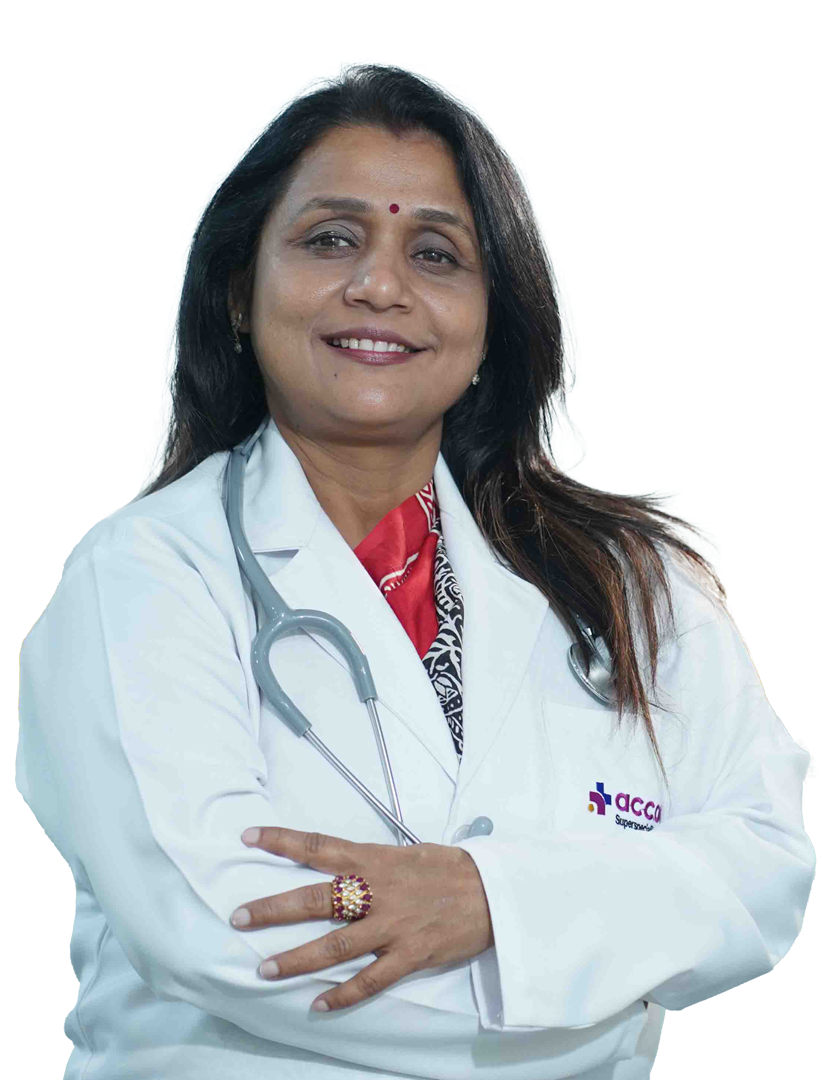
Dr. Divya Kumar

Senior Gynaecologist, Obstetrician & Infertility Specialist

Dr. Divya Kumar is a highly respected gynaecologist and obstetrician with over 15+ years of clinical experience. She specializes in managing normal & high-risk pregnancies, infertility treatments, and advanced gynaecological endoscopic surgeries.

Known for her compassionate approach and evidence-based care, Dr. Divya has helped thousands of couples successfully achieve safe pregnancies and parenthood.

High-Risk Pregnancy IVF & Infertility Recurrent Miscarriage Gynae Laparoscopy PCOS Treatment
Dr. Divya Kumar - Gynaecologist